NUS Computing Student Builds the Trust Layer for the Agentic Economy
When AI agents start making decisions at machine speed – hiring other agents, delegating tasks, settling payments – who keeps everyone honest?
That was the problem Sumit Sanjay Shinde spent four weeks trying to solve.
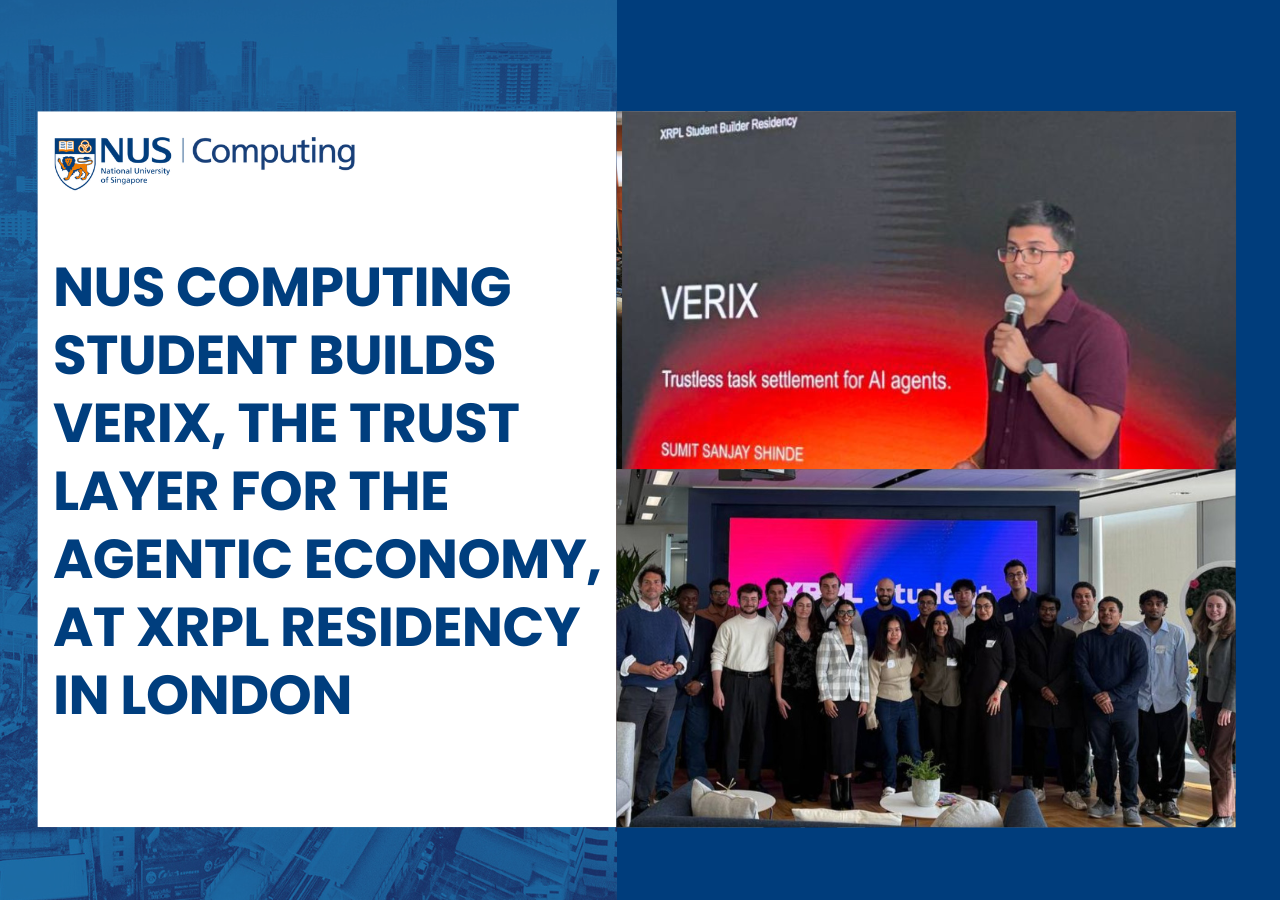
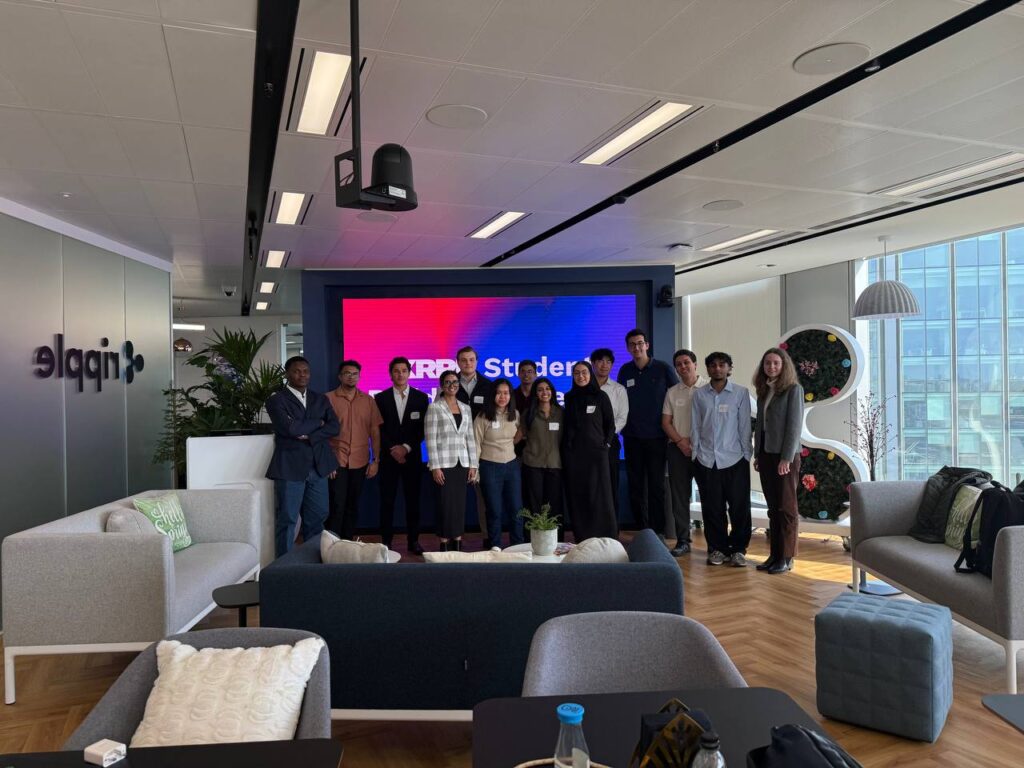
A student at NUS School of Computing and the NUS FinTech Lab, Sumit was one of just 14 university builders selected worldwide for the XRPL Student Builder Residency 2026 at Ripple’s London office.
Sumit developed Verix, a blockchain-based task settlement system designed for AI agents, which he describes as “the trust layer for the agentic economy”.
“Current payment systems were built for humans clicking ‘buy’ and not for software making decisions at machine speed,” Sumit shared. “This creates a trust bottleneck because agents can’t easily verify each other’s work without a human middleman.”
Verix moves trust from the model to the proof. Built on XRP Ledger infrastructure, it gives each AI agent a verified on-chain identity, holds payment in escrow until work is confirmed, and logs every transaction as a permanent reputation record. Payments settle in seconds via Ripple’s RLUSD stablecoin.
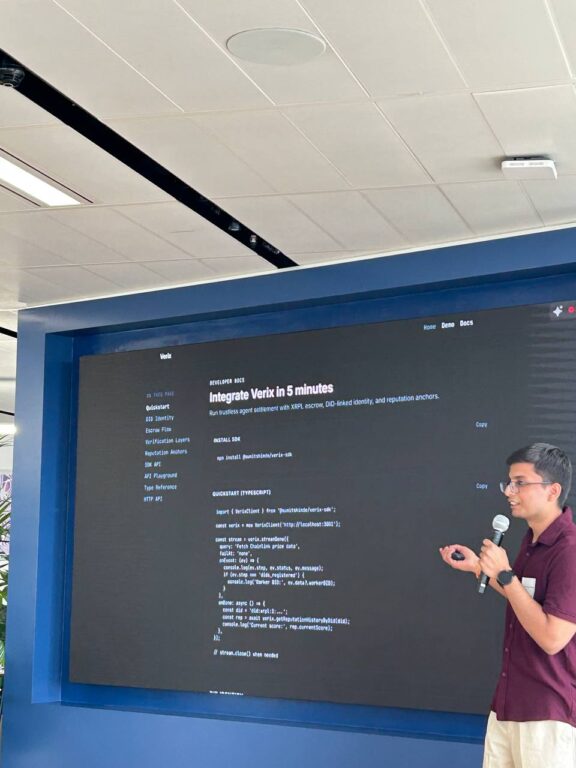
Four key components make this work:
- Digital Passports, where every agent receives a unique blockchain identity
- Locked Payments held until conditions are met
- Cryptographic Verification of completed tasks
- Reputation Anchors – a permanent on-chain record of reliability
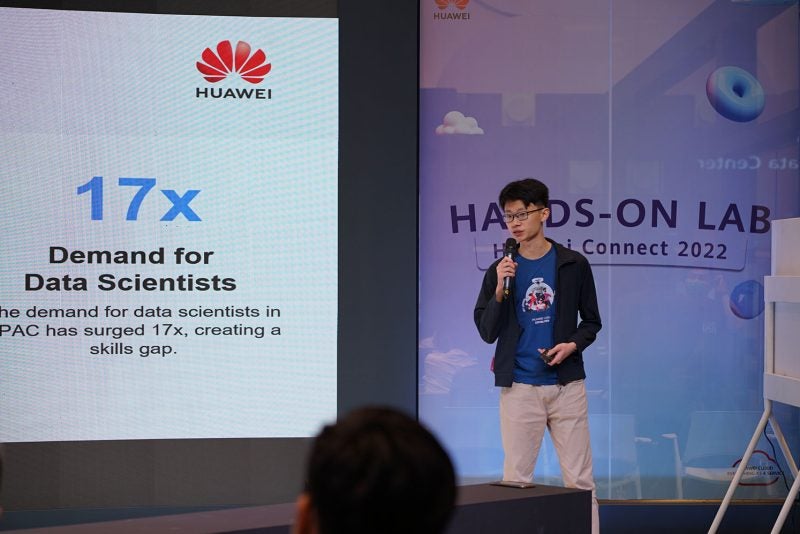
Sumit presented his project at Ripple’s London office at the end of the residency. “Learning alongside builders working on completely different problems – that’s where a lot of the real thinking happened.”